
Cambridge Pavers Home Remodeling in Kent: A Homeowner’s Guide
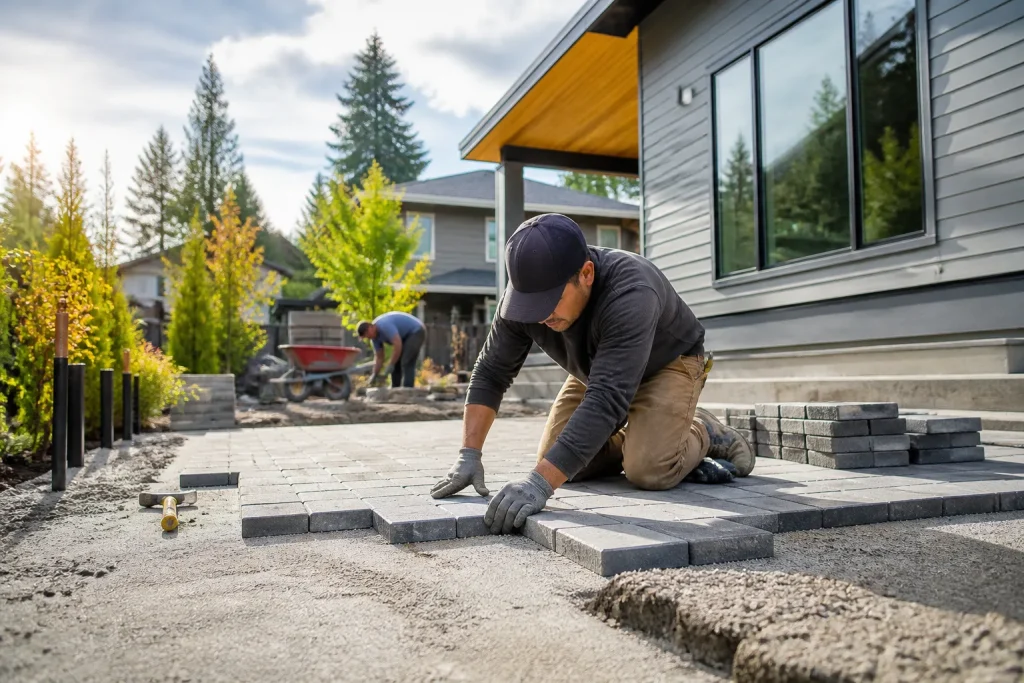
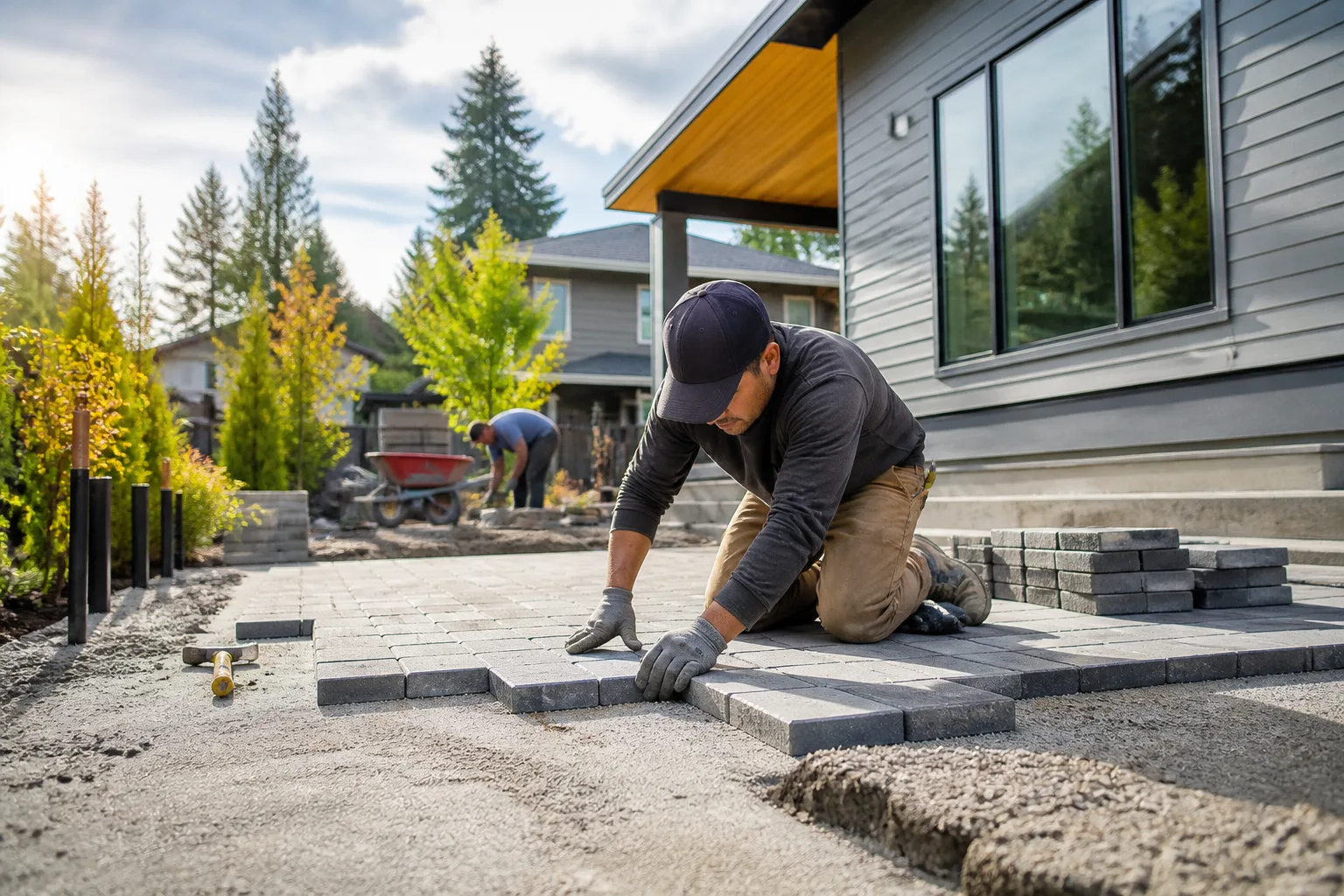
Cambridge Pavers can outlast the house they sit in front of, which is exactly why it stings when a patio starts rocking underfoot two winters after installation. The culprit is almost never the paver. It’s the base under it. If you’re planning a paver driveway, walkway, or patio in Kent, the most important conversation you’ll have with any contractor happens before a single stone gets laid, and it’s about how deep they plan to dig. Get that answer wrong and the warranty won’t save you.
Why Kent’s Clay-Heavy Soil Changes the Whole Equation

Kent sits on soil that holds water like a sponge and expands and contracts with the seasons. That combination is brutal on a shallow base. Cambridge’s own installation specs assume a certain compacted gravel depth, and those specs are a floor, not a ceiling. On a lot with heavy clay and poor drainage, we’ve seen that base need to go several inches deeper than a generic spec sheet calls for to keep the surface stable through a wet King County winter and the freeze-thaw that follows.
Here’s what to ask any contractor before work starts:
- How deep is the excavation? Ask for the number in inches and get it in writing. If they can’t answer specifically, that’s your answer.
- What’s the base material? Crushed, angular gravel compacted in lifts, not a single dumped layer.
- How many compaction passes? A plate compactor should run over each lift, not just the finished grade.
- What’s the drainage plan? Where does water go when it leaves the pavers? On clay, it needs somewhere to be.
A base that’s two inches too shallow on the wrong lot is the single most common reason pavers heave, shift, and rock by spring. The paver held up fine. The ground underneath it didn’t.
Ledgestone, Cobble, or Rumblestone: Which Profile Fits Your Kent Home?
Cambridge Pavers come in distinct profiles, and they’re not interchangeable in feel. Matching the profile to the job and to your house is where a paver project either looks like it was always there or looks bolted on.
- Ledgestone has a chiseled, dimensional face that reads formal and substantial. It works hard on driveways and front entries where you want weight and definition. On a home with brick or stone accents, it can echo that texture nicely.
- Cobble is the classic European look, softer and rounder. It suits walkways and courtyard-style patios and pairs well with Cottage and Craftsman homes that are common around Kent.
- Rumblestone blends tumbled profiles for a slightly aged, lived-in surface. Good on patios and pool decks where you want grip underfoot and a less formal read.
Foot traffic matters too. A driveway takes vehicle loads and needs a beefier base and a profile that won’t shift under a tire turning in place. A back patio takes chairs and feet and can run with a lighter build. Match the profile to the load, then match the color to the house.
Matching Pavers to Kent’s Housing Stock (and Avoiding the Mismatch)
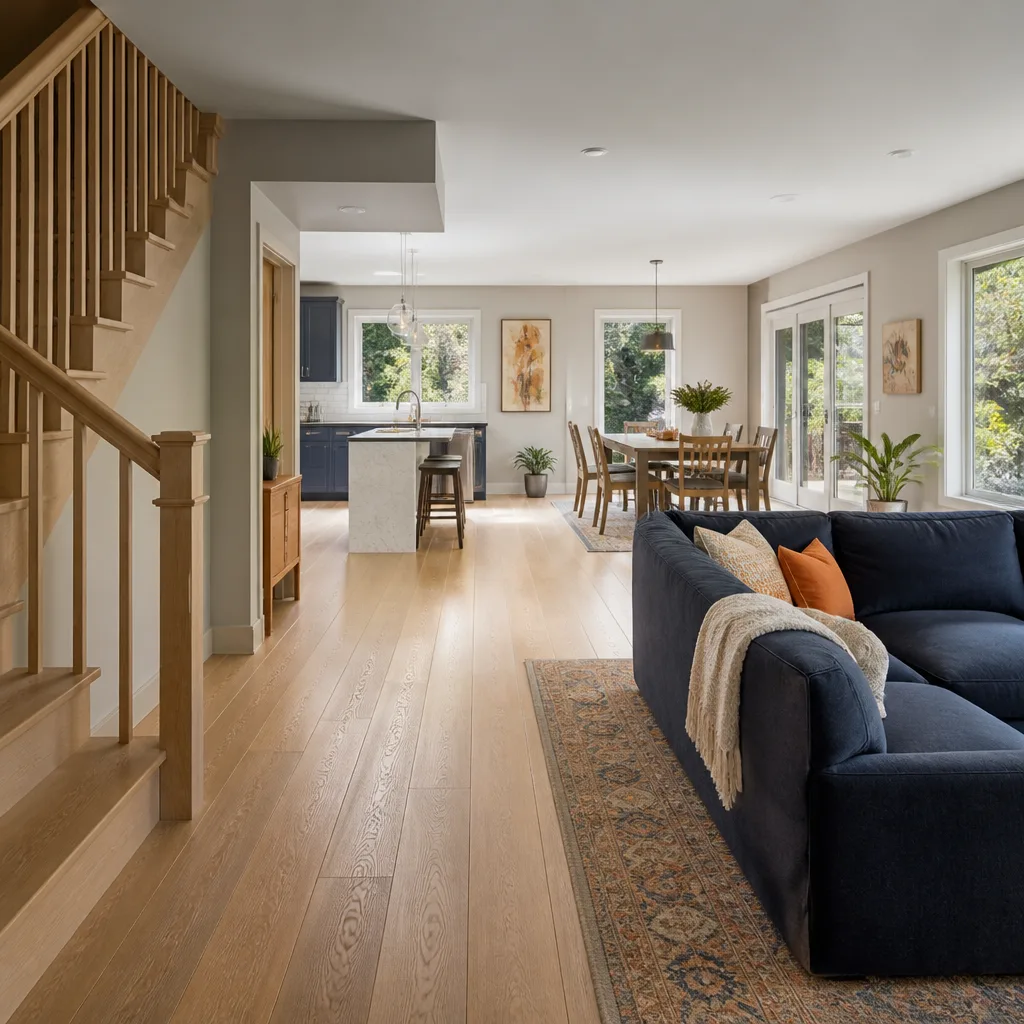
The most common visual mistake isn’t the wrong paver. It’s the wrong relationship between the paver and the house. A warm, red-toned paver against cool gray siding can fight each other from the curb. A too-uniform surface against a very traditional home can look flat.
Some pairing guidance for the housing styles you see around Kent:
- Brick and red-siding homes: lean into warm tans and blended browns rather than pulling in a competing red. Let the house own the red.
- Gray and blue-gray siding: charcoal and cool gray blends keep the palette calm. A warm paver here is a deliberate contrast choice, not an accident.
- Craftsman and Cottage: tumbled or blended profiles in earthy tones hold the character better than a single flat color.
- Modern and contemporary: cleaner, tighter color fields with a sharper edge detail read better than busy blends.
When we help homeowners choose, the goal is the right material for the space, not just what’s on the pallet. A paver that complements the James Hardie siding and roofline already on the house will always look more expensive than one that doesn’t, regardless of what it cost.
Drainage, Permeability, and Permits for Paver Work in Kent
Here’s where a lot of paver projects run into trouble that has nothing to do with appearance. Kent, like much of the region, cares about stormwater. Hard surfaces send water somewhere, and the city wants to know where. Adding a large impervious driveway or patio can affect your site’s drainage and may bring permit or stormwater review into the picture, depending on the size and location of the work.
What that means practically:
- Ask early whether your project needs a permit. Don’t find out after the gravel’s already delivered. Your city’s building department is the source of truth here.
- Permeability can matter. Some paver systems are installed with open joints and a drainage bed so water passes through rather than sheeting off. On clay lots that struggle to drain, a permeable approach can be the difference between a working surface and a puddle.
- Have a drainage plan in writing. Slope, outlets, and where water ultimately goes should be spelled out, not improvised on site.
If the permit and drainage questions feel like they’re ballooning, that’s the moment a professional is worth having in the conversation. This is also why paver work is best handled alongside the rest of your exterior scope: siding, trim, and grading all influence how water behaves on your lot, and it helps to have one company thinking about all of it.
What Cambridge Paver Installation Really Costs in Kent

Cost per square foot for Cambridge Pavers in Kent depends far more on site conditions than on the paver itself. A flat, accessible patio over decent soil is one number. A sloped driveway over heavy clay that needs deep excavation and drainage work is another. Below are typical ranges homeowners should budget for; your written estimate is what sets the final price.
| Component | Typical Range (per sq ft) |
|---|---|
| Paver material (Cambridge profiles) | Call for current material pricing |
| Excavation and base prep | Varies by depth and soil; often the biggest line item |
| Compacted gravel base and sand bed | Included in site prep quote |
| Edge restraint and polymeric joint sand | Quoted as a line item |
| Sealing (after cure) | Quoted separately |
| Drainage or permeable system (if required) | Site-specific |
We’re deliberately not printing hard dollar figures here, because a number pulled from a national page tells you nothing about your lot. The honest answer is that base prep is where the money goes, and any quote that skips past it is either guessing or cutting a corner you’ll pay for later. Ask for a line-item written quote that shows excavation depth, base material, edging, and sealing as separate items, with fixed pricing and no change orders.
How Pavers Fit Into a Larger Remodel
A paver project rarely stands alone. It sits at the edge of your siding, your paint, your porch, and your grading. If you’re already planning work on the house, it pays to think about the exterior as one project rather than three.
New paint changes how a paver color reads. New siding changes the whole palette. A paver patio installed after a home remodeling project, with the finishes chosen together, will look far more intentional than one selected in isolation. The same goes inside: if you’re planning a kitchen remodeling or bathroom remodeling project, pairing it with exterior work lets one team think through material and color choices as a whole, so the finished house feels of one piece.
When to Call a Pro
If you’re comfortable with a shovel and a plate compactor, more power to you. But once you’re dealing with the excavation depth a clay-heavy Kent lot demands, a proper drainage plan, and the possibility of a permit, that’s not a weekend project anymore. Getting the base wrong voids the lifetime structural warranty Cambridge puts on its pavers, and no amount of resealing fixes a base that was built too shallow. There’s no warranty on regret.
Related services in Kent: Pair exterior paver work with Remodeling Kent full-scope projects so grading, siding, paint, and hardscape are planned together and finished in sync.
The Bottom Line
Cambridge Pavers are one of the highest-return exterior upgrades a Kent homeowner can make, but only when the base is built for Kent’s clay and King County winters. Choose a profile that fits your house, plan for drainage and permits before you dig, and insist on a line-item quote that shows the excavation depth in writing. The paver that looks perfect in September depends entirely on what’s under it.
If you’re in Kent and need help, Remodeling Kent offers free estimates. Call (253) 216-8339 to schedule yours.
Frequently Asked Questions
It depends mostly on site conditions rather than the paver. Excavation depth, base material, drainage, and whether a permit is required all move the number more than the profile you choose. Ask for a line-item written quote with fixed pricing. Call (253) 216-8339 for a free estimate.
No. Cambridge’s lifetime structural warranty is voided by improper base depth and installation. That’s why the base plan matters more than the surface: on Kent’s clay soil, a base that’s too shallow is the most common reason pavers heave and shift after a winter. Call (253) 216-8339 and we’ll walk through your site.
Not with us. We quote the job fixed, based on the written estimate, with no change orders. If site conditions reveal something unexpected during excavation, that’s a conversation before any work continues, not a surprise invoice. Call (253) 216-8339 for a written quote.
Possibly. Adding impervious surface can trigger stormwater review or a permit depending on size and location, so check with Kent’s building department early. A permeable paver system may also factor into what’s required. Call (253) 216-8339 to schedule a free estimate.
Written by the team at Remodeling Kent.
Need Construction Help?
Call Remodeling Kent - the local pro we connect you with is licensed and insured, here with fast help in Kent.
(253) 216-8339