
Last updated November 25, 2026








Free written scope consultation - allowances, timeline, and change-order rules on paper before a single trade is scheduled
How to Hire a Construction Contractor in Kent: A Step-by-Step Guide
Most homeowners in Kent start the hiring process by collecting three bids and reading online reviews. That approach feels responsible, but it doesn’t protect you from the failures that actually sink remodeling projects: scope gaps between trades, unlicensed workers showing up on site, and quotes that quietly leave out permits and cleanup. A contractor can be honest, well-reviewed, and still hand you a bid that leaves you responsible for demolition costs and inspection fees. What separates a smooth project from a costly one is rarely the bottom-line number. It’s how carefully the scope, the license record, the payment schedule, and the contract language are put together before anyone picks up a hammer. This guide walks through the vetting and contract details that genuinely determine outcomes in Kent.
Quick Answer
To hire a construction contractor in Kent, verify the contractor’s license and bond through the Washington State Department of Labor & Industries, get a written scope that includes permits, debris hauling, and appliance hookups, and tie payments to milestones you can inspect rather than to a calendar. Read every allowance and time-and-materials clause before signing, and confirm who actually performs the work: the contractor’s own trades or unvetted subcontractors. The best-value bid is the one whose scope you can compare line for line with the others.
Styles & brands we work with
- Kitchen remodeling
- Bathroom remodeling
- Home additions & ADU
- Roofing
- Windows & doors
- Driveway & pavers
- Fence
Table of Contents
- How to Read a Washington State Contractor License Lookup
- Scope Line Items Kent Contractors Routinely Leave Out
- What a Fair Payment Schedule Looks Like in Washington
- In-House Trades vs. Subcontractors: Why It Matters in Kent
- Red Flag Language in Construction Contracts
- How to Compare Bids That Look Nothing Alike
- Judging Material Choices and Brand Credibility
- Common Mistakes to Avoid
How to Read a Washington State Contractor License Lookup
A Washington State contractor license lookup returns more than a yes-or-no answer, and most homeowners read only the first line. The registration status tells you whether the contractor can legally work in the state right now. The bond amount tells you something different, and arguably more useful: how much financial capacity sits behind the registration. A bond in the statutorily required minimum range signals a small operation. A larger bond signals a contractor who has grown enough to carry more risk. Neither number tells you whether the work will be good, but both tell you whether the contractor is playing by the rules.
Pull the lookup before you invite anyone to a Kent address, and read it in this order:
- Status. The registration must be active, not expired or suspended. A lapsed registration means you lose access to the state bond as a remedy if something goes wrong.
- License type. General contractors hold a different registration class than specialty contractors. A specialty registration limits the scope that contractor can legally take on, so match the class to the job.
- Bond amount. The bond is what protects you, in part, if the contractor fails to pay subcontractors or suppliers. Compare the amount to the size of your project. A tiny bond behind a large remodel is a mismatch worth asking about.
- Insurance on file. Ask for a current certificate of general liability insurance, and confirm it lists the coverage dates that overlap your project.
- Registration expiration. If it lapses mid-project, the protections you counted on lapse with it. Note the expiry date before signing.
Ask the contractor to send you the registration number directly, then look it up yourself rather than trusting the paperwork in front of you. A contractor comfortable with that request has nothing to hide. One who deflects it has told you something important. This is the first filter, and it costs you ten minutes.
Scope Line Items Kent Contractors Routinely Leave Out
The biggest reason two bids for the same kitchen look nothing alike is scope, not price. Demolition, permit fees, debris hauling, appliance hookups, and touch-up painting get dropped from quotes far more often than homeowners expect. Each omission is a real cost you’ll pay later, and once the contract is signed you lose the leverage to negotiate it. When you shop for kitchen remodeling, insist every bid carry the same line-item structure so you can compare what’s actually included.
Here are the items to check, by name, in every quote you receive:
- Demolition and removal. Tearing out old cabinets, countertops, tile, and flooring, and carrying it away. Ask where the dumpster sits and who pays for it.
- Permit fees and handling. The fee itself and the labor of applying. Ask explicitly who pulls the permit and whose name appears on it.
- Debris hauling and final clean. Jobsite cleanup during the project and a full clean at completion. It’s rarely bundled by default.
- Appliance and fixture hookups. Dishwasher, disposal, range hood venting, faucets, and shutoff valves. A contractor quoting installation of a new Kohler or Grohe fixture should name the hookup in the scope.
- Touch-up painting and drywall repair. Patching where tile, trim, or cabinetry meets the wall. Frequently billed as an extra after the fact.
- Dump fees and disposal of old materials. Old quartz, demolished tile, and worn flooring all carry disposal costs that belong in the quote, not in a surprise invoice.
- Final touch-ups and punch list. The final walkthrough corrections, written into the contract so nothing gets left undone.
Hand each contractor the same written scope checklist and ask them to quote against it. The bids you get back will finally be comparable, and the contractor who pads the list with vague allowances stands out immediately.
What a Fair Payment Schedule Looks Like in Washington
A fair payment schedule in Washington ties money to milestones a homeowner can see, not to dates on a calendar. Deposits exist, and a modest initial payment is normal, but the bulk of the money should follow completed, inspectable work. If a contractor wants most of the price up front, understand why before signing. Front-loaded schedules shift the financial risk onto you, and they remove the contractor’s incentive to finish on schedule.
Here’s how to think about each schedule structure you’re likely to see:
- Milestone-based. Payments release as phases complete: demo done, rough-in inspected, cabinets set, final walkthrough. This is the structure that protects you best, because every payment maps to work you can see.
- Calendar-based. Payments tied to specific dates regardless of progress. Contractor-favorable, and risky if material deliveries slip or the permit queue delays the start.
- Front-loaded. A large deposit followed by smaller amounts. Ask what the deposit covers. If it’s not materials and mobilization, push back.
- Progress-billed with retainage. A final percentage held back until the punch list clears. This is standard on larger commercial work and a reasonable ask on a substantial residential remodel.
Keep payments coming in amounts that match the value of work in place, and never pay for a phase before it’s finished. Put the schedule in the contract with milestone descriptions rather than dates alone.
In-House Trades vs. Subcontractors: Why It Matters in Kent
Whether a contractor uses in-house trades or subs is one of the least-asked and most consequential questions in the hiring process. General contractors in Kent rely heavily on subcontractors, and that’s not automatically a problem. The problem arises when no one owns the seam between trades. The plumber and the tile setter disagree over a drain height, the electrician reschedules, and the cabinet install slips a week. Who absorbs that cost and that delay depends entirely on how the contract is written.
Ask each contractor a direct sequence of questions:
- Which parts of this project will your own trades perform, and which are subbed out?
- Are your subs licensed, and can I see their registration?
- Who supervises the site day to day, and how often will they be here?
- How do you handle a trade that falls behind?
Then compare. A contractor who runs painting, flooring, cabinetry, and tile under one roof removes the handoffs that cause the most schedule pain. Our Remodeling Kent team works that way on purpose, because a full-scope project with one point of contact never has two trades blaming each other for a missed date. This matters especially during Kent’s active building season, when good subcontractors are booked out and a contractor without dependable trades can stall for weeks waiting on someone else’s calendar. Single-source accountability is the difference between a remodel that stays on schedule and one that drifts.
Red Flag Language in Construction Contracts
Most contract problems are visible before the first nail is driven, hiding in plain language. Allowances without defined products, time-and-materials clauses without caps, and vague lien waiver timing are three of the worst offenders. Read every contract with a pen in hand. If a phrase makes you uneasy, ask for it to be clarified in writing before you sign, not after the work starts.
Watch for these specific patterns:
- Allowances without products named. An allowance is a budget placeholder. A $4,000 cabinet allowance means nothing if the contract doesn’t name the line or the model. Specify the brand and model: KraftMaid, Wellborn, and comparable lines should be written in by name so the allowance means something concrete.
- Time-and-materials without a cap. Open-ended T&M means the price can climb with your signature. Require a not-to-exceed figure or a written change order for anything over a set threshold.
- No lien waiver language. The contract should state when subcontractor and supplier lien waivers will be provided, usually at final payment. Without it, an unpaid sub can file a lien against your home even though you paid the contractor in full.
- Omissions of permits. A contract that doesn’t mention permits means the permit is on you, or never happens.
- Change-order procedure left vague. Every change should require a written, signed order with its own price and schedule effect. No verbal add-ons.
- No start or completion date, or one with an escape clause. A schedule with unlimited weather and material delay exits means the timeline is meaningless.
These clauses aren’t hostile to a good contractor. A professional expects them, because they define the job clearly and keep both sides accountable. Any resistance to spelling them out is itself the answer.
How to Compare Bids That Look Nothing Alike
Comparing bids line for line is the only way to know what you’re actually buying, and the only way to catch a bid that’s missing scope. Three quotes for the same project can differ wildly even when the contractors are all competent, because each one is describing a different job. Your task is to normalize them so you’re comparing the same scope. Homeowners investing in a home remodeling project should treat the bid comparison as a working document, not a three-line summary.
Work through this sequence with every quote:
- Match line items. Use your own written scope checklist and confirm each bid covers every item. Flag any missing line.
- Ask about the gaps. Send the missing line back to the contractor and request a written addition. The gap itself is a signal about how carefully the bid was built.
- Compare material specifications. Quartz brand, cabinet line, fixture brand, flooring type. A bid naming Cambria or Silestone is easier to price-check than one naming “quartz, allowance.”
- Check the schedule. Compare start and completion dates and ask each contractor to explain their assumptions about the permit timeline.
- Review the payment schedule. If milestones don’t map to work, adjust them.
- Read the terms. Contract language, warranty, change-order procedure, and lien waiver timing.
Once the bids are normalized, the low number often turns out to be low for a reason: it left out demo, it assumed you’d pull the permit, or it named an unpriced allowance. The normalized comparison tells you the real cost and the real contractor fit.
Judging Material Choices and Brand Credibility
The brands named in a bid tell you how seriously the contractor takes material spec, and material spec determines how the finished work holds up. A quote that names KraftMaid or Wellborn for cabinetry, Cambria or Caesarstone for the countertop, and Kohler, Moen, or Grohe for the fixtures is a quote you can price-check and question. A quote that says “premium materials” is a quote that lets the contractor substitute at the last minute, and substitutions are where a project quietly loses quality.
For the fixture side, brand names also tell you something about warranty support. Kohler, Toto, American Standard, and Delta all stand behind their products, and installations done to each manufacturer’s specification keep those warranties intact. Tile systems work the same way: a Schluter-based installation, done to spec, carries the protection the system was built for. Exterior materials follow the same logic, whether that’s James Hardie fiber cement, Boral, Tamko, or Atlas products under the roof. If a contractor can’t name the brand and the install standard for the material they’re quoting, ask why.
You may also be choosing finishes through the contractor rather than hunting vendors yourself. In our experience, homeowners get better results when material selection lives inside the project conversation rather than on the far side of it. Bathroom remodeling is where brand spec gets tested hardest: tile, fixtures, and surfaces all interact, and a single set of standards from one contractor keeps the finished room coherent. When the contractor helps you choose between comparable brands and then installs what you confirmed in writing, the result is a project that holds up as long as the products do.
Common Mistakes to Avoid
- Skipping the state license lookup. A friendly contractor and a current registration are two separate things. Ten minutes on the Washington State Labor & Industries lookup saves months of headache.
- Comparing bids without normalizing scope. The lowest number usually means the smallest scope, not the best value. Put every bid on the same checklist before you compare prices.
- Paying a large deposit up front. Front-loaded payment schedules shift risk onto you. Tie money to milestones you can inspect and adjust the schedule before you sign.
- Accepting undefined allowances. An allowance without a named brand and model is a placeholder for a future argument. Write in the cabinet line, the quartz brand, and the fixture spec.
- Ignoring the permit text. Kent’s permit process takes time, and a contract that doesn’t say who pulls the permit leaves the job exposed to an inspection failure. Confirm the permit is named in scope.
- Not asking who does the work. A licensed general contractor can still subcontract the actual install to unlicensed or unvetted workers. Ask directly which trades are in-house and which are subbed, and get sub licenses in writing.
- Signing without a lien waiver clause. Paying the general contractor doesn’t stop a subcontractor from filing a lien against your home. The contract should state exactly when lien waivers arrive.
See the difference
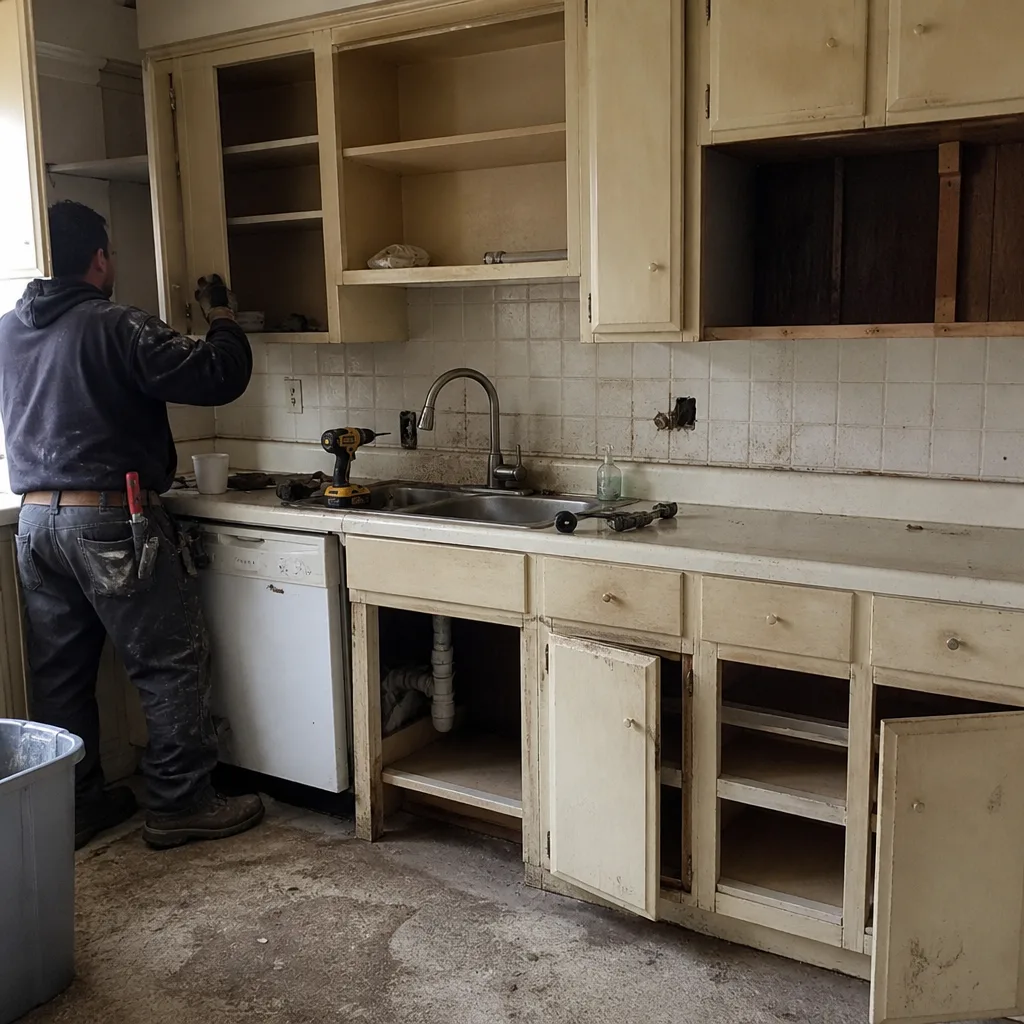 Before
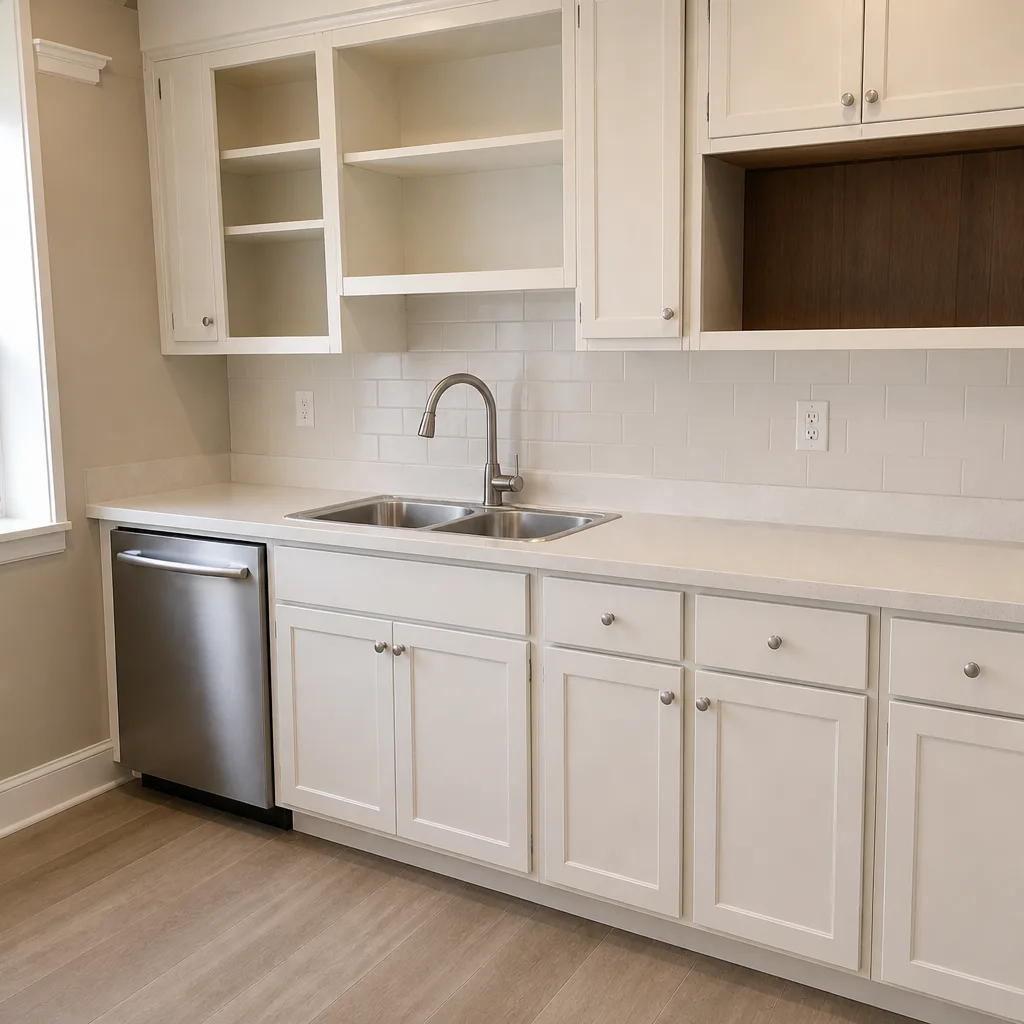 After
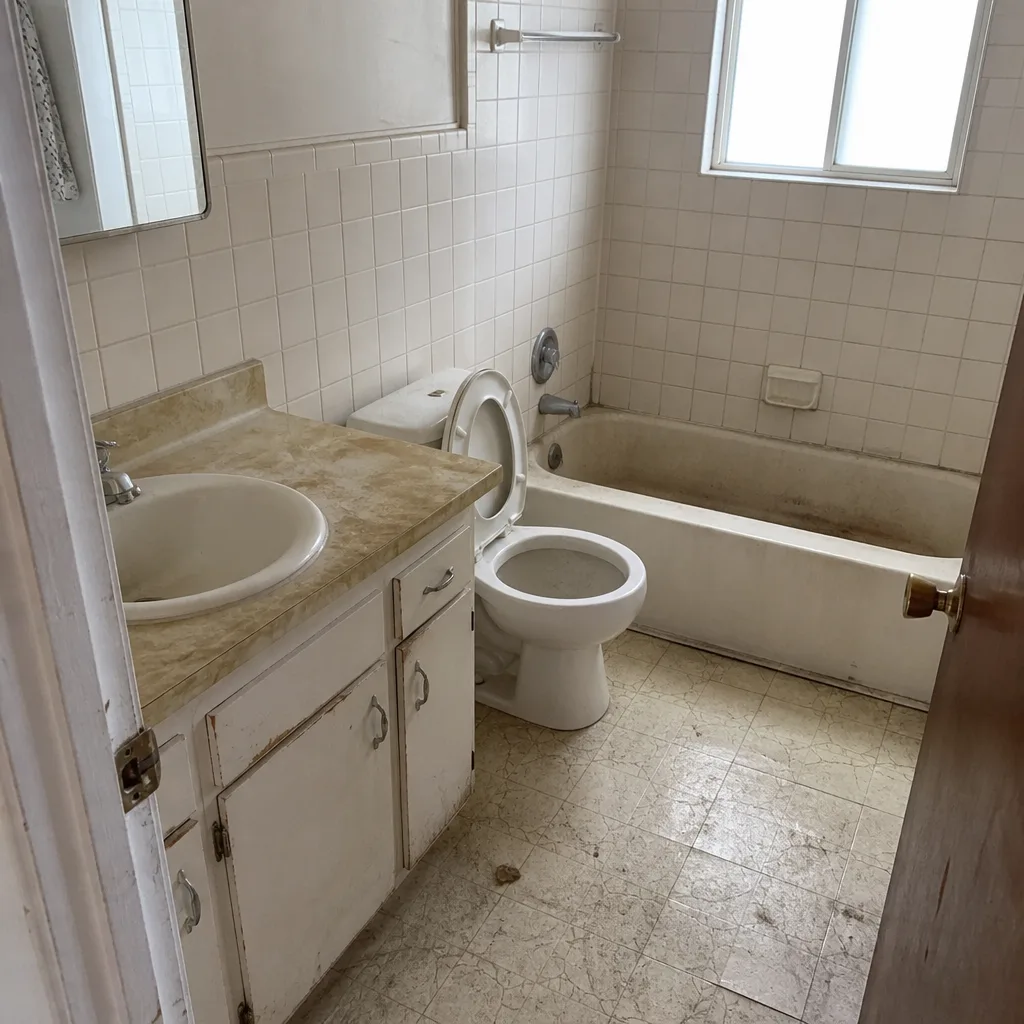 Before
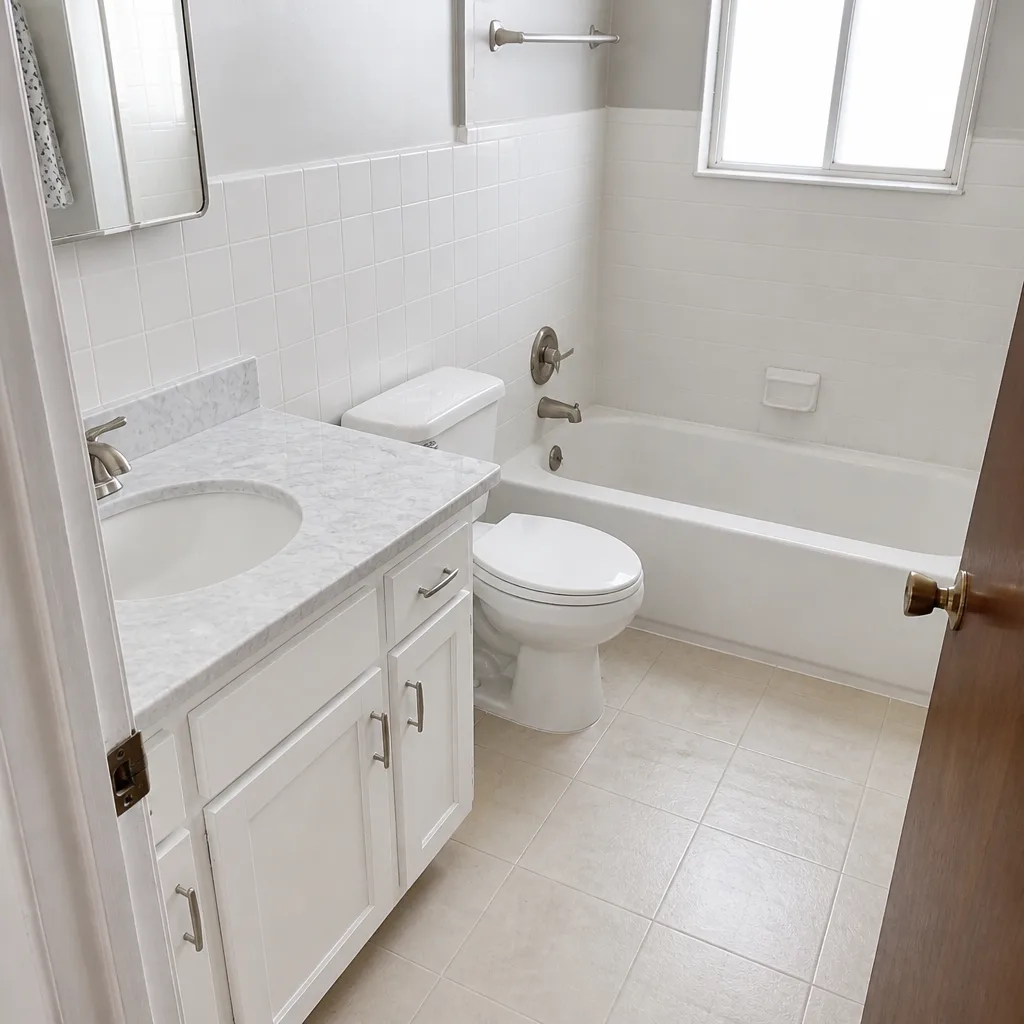 After
 Before
 After
When to Call a Professional
Some signs point clearly to a professional call. A project that moves or removes walls needs an engineer and permit review, not a weekend hack. Any plumbing or electrical work beyond swapping a fixture needs a licensed trade. A remodel that spans two or more rooms, a kitchen and a bathroom, or the kitchen plus new flooring and paint, is usually beyond the one-trade do-it-yourself route, and touching the pieces out of order makes it worse. So does any job where a permit will be required and you’re unsure who pulls it. If you’re comparing bids and the scope gaps are multiplying, bringing in one contractor to run the full scope closes those gaps. Remodeling Kent offers free estimates in Kent, with a written line-item quote and manufacturer-backed install standards. Call (253) 216-8339 to schedule yours.
Frequently Asked Questions
Kitchen remodel costs in Kent vary widely with scope, and the honest answer is that the written estimate sets the final price. What matters when comparing bids is that demo, permit fees, cabinet installation, countertop fabrication, and appliance hookups are quoted line by line rather than summarized. Ask each contractor for the same itemized scope and compare the total scope, not just the bottom line. Call (253) 216-8339 for an exact quote. Estimates are free.
Use the Washington State Department of Labor & Industries contractor lookup, enter the registration number the contractor provides, and confirm the status is active and the registration class matches your project. Then ask for a current certificate of general liability insurance and a bond confirmation. Read the bond amount and compare it to your project’s size. Call (253) 216-8339 if you have questions about our own licensing and insurance.
A good contract limits price changes to signed change orders, and that’s the standard to demand. Hidden surprises usually come from undefined allowances, open time-and-materials clauses without a cap, or scope items left out of the original bid. When the bid names the materials and lists every line, the price at completion should match the price you signed. Call (253) 216-8339 to talk through a written estimate that spells this out.
The permit requirement depends on the scope, and the contract should say exactly who pulls it. In Kent, permits are handled through the city’s building department, and the timeline for review affects your start date. Ask each contractor to write the permit line into the scope and state who pays the fee and whose name appears on it. Call (253) 216-8339 to confirm the permit plan for your project.
A project timeline depends on scope, material lead times, and the permit queue, and no honest contractor quotes a completion date without those inputs. What you should expect from the contract is a start date, a completion date, and a stated assumption about permit review time. Cabinetry and quartz fabrication lead times often drive the schedule more than labor. Call (253) 216-8339 for an estimate with a realistic segment-by-segment schedule.
Normalize the scope first. Give every contractor the same written checklist, including demo, debris removal, permits, appliance hookups, and touch-up painting, and require a written line-item bid against it. Then compare named materials (KraftMaid, Cambria, Kohler), payment schedules, and contract terms. A bid gap almost always turns out to be a scope gap, not a price difference. Call (253) 216-8339 to review a written line-item quote.
The Bottom Line

Hiring a construction contractor in Kent comes down to discipline in four places: the license lookup, the scope checklist, the payment schedule, and the contract language. Get those right and you’ll compare bids on the same job, not on marketing. Name your materials in writing, tie money to completed milestones, demand written change orders, and confirm who actually does the work. One contractor who runs every finish from first fixture choice to final coat of paint removes the handoffs that stall a project. Remodeling Kent connects homeowners with vetted local professionals and free written estimates, so you can start with the details that decide the outcome. Call (253) 216-8339. We answer 24/7. Fast dispatch from 7am to 7pm, Sunday through Friday.
Written by the team at Remodeling Kent.